
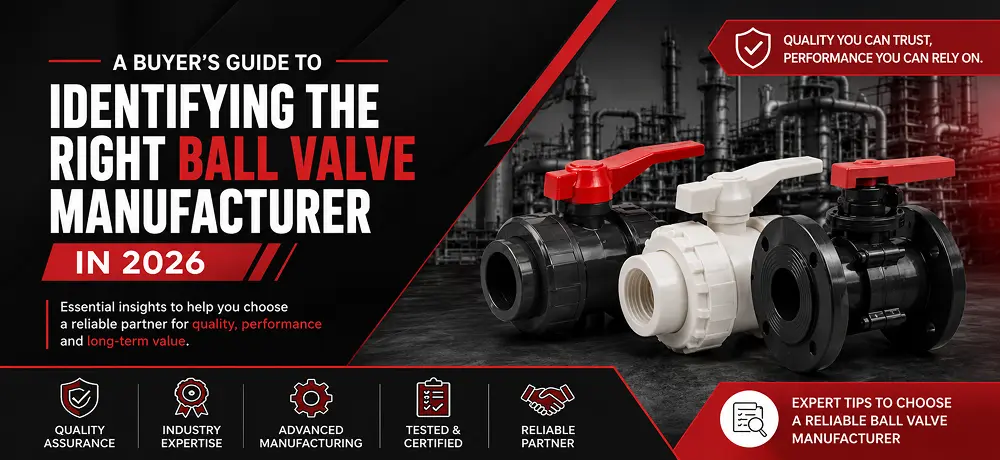
Flawless chemical, agricultural and industrial processing has made flow-control infrastructure a critical priority in 2026. The unassuming Ball Valve lies at the heart of this movement, a mechanical component that provides the essential sealing, sectioning, and fluid control over time.
Procurement is not simply finding a range of possible prices in the market anymore, whether you are buying abrasive chemical slurries or working with a large agricultural water distribution system. It demands qualified engineers who comprehend material chemistry and structural pressure configurations. This all-encompassing buyer's guide explains all the considerations that industrial operations need to consider if they're looking to source a manufacturing partner for their infrastructure.
Material Selection and Structural Durability
Industrial fluid handling systems are exposed to harsh operating conditions. Using only generic alloys or uncertified recycled plastics can lead to early line cracking and unplanned downtime.
A worthwhile network must have a skilled polymer and engineering team with an understanding of the unique properties of materials.
As you look for an excellent Ball Valve Manufacturer, see if they are capable of using specialty polymers:
- Polypropylene (PP): : Ideal for high temperatures and highly corrosive industrial applications.
- High-Density Polyethylene (HDPE): Good for use in flexible underground irrigation systems and water distribution mains.
- PVDF & Solid UPVC: Specialized use for high-purity chemical processing, electroplating plants, and water treatment loops:
Having a reliable partner such as Gokul Poly Valve Pvt. Ltd that creates piping catalogs from 100% virgin raw materials and the latest injection molding technology, allows you to have the assurance that your piping networks can withstand the operational wear and tear in real life.
Advanced Quality Assurance and Testing Guidelines
A good flow control asset should operate flawlessly at all times required during the life of the asset as designed in the factory, not just during factory test periods. The time for operating errors is over in 2026. One leaky seal can lead to expensive chemical leaks or crop destruction.
It is always important to verify that the Ball Valve Supplier has a properly defined and in-house quality validation matrix. A true manufacturer will not miss step-by-step inspections. They intentionally subject random production batches to destructive tests, emulating the most extreme conditions in the pipeline, including, but not limited to, high back pressures, fluid surges and emergencies under stress until the structural components fail.
From large flanged valves to the smallest lateral lines, every piece is guaranteed to arrive at your site defect free, thanks to a process that is certified as ISO 9001:2015.
Comprehensive Product Customization and Scaling Capacity
Many industrial layouts will have an unusual layout. You need to find suppliers from different geographical locations which cause problems with equal components and long-term support. The best manufacturer for your system will provide you a broad configuration range.
The Integration Checklist: Make sure your partner can provide a large number of compatible parts. A capable Ball Valve Manufacturer, for example, will readily accommodate your operation with solid, compression fittings and service saddles, butt-weld, screwed, and 3-piece flanged end profiles, and single-piece solid models.
Frequently Asked Questions (FAQs)
1. What makes virgin PP and HDPE ball valves better than metal alternatives?
Valves made from virgin Polypropylene (PP) and High-Density Polyethylene (HDPE) material offer complete protection against rust and chemical corrosion. They are much lighter than metal options, cost-effective, and do not allow any internal scaling to build up, ensuring uniform flow velocity.2. What should a project manager check before placing a bulk procurement order?
Always check for verified ISO quality certifications, ensure that the manufacturer uses 100% virgin grade materials and learn more about their testing methods. A reliable partner should clearly specify maximum pressure ratings (e.g. PN10) and chemical resistance tables.3. Can industrial plastic ball valves handle heavy chemical processing applications?
Yes. Special variants are specifically developed to resist effect of aggressive industrial fluids, electroplating process, effluent treatment plants and corrosive chemical fertilizers without undergoing structural degradation, especially polypropylene (PP) and PVDF valves.Conclusion
Choosing the best engineering partner is an investment in the long-term health of your company. Working in conjunction with an industry expert such as Gokul Poly Valve Pvt. Ltd, your facility will enjoy Ball Valve solutions that are highly durable, precision-molded – optimized for flow control, reduced risk of leakages and long-term uptime of the production floor.
